
In manufacturing, precision is the backbone of product quality. Accurate measurements are not just a technical detail—they’re the foundation for meeting customer expectations and staying in line with industry regulations. Regular calibration of instruments and equipment plays a central role in maintaining that accuracy. F. D. Hurka Metrology in Charlotte, NC, understands that when calibration is overlooked, even slightly, equipment performance can slip, leading to unplanned downtime, expensive repairs, and potentially unsafe conditions on the production floor. For manufacturers, such interruptions can throw off production schedules, reduce output, and harm long-term profitability.
The risks of ignoring calibration go far beyond production delays. Missed calibration intervals can create compliance problems that result in financial penalties or recalls. For companies in fields like pharmaceuticals, food manufacturing, and aerospace, where accuracy directly affects safety, improper calibration can carry serious consequences, including legal and public safety concerns. F. D. Hurka Metrology provides calibration services designed to help companies avoid these risks and support consistent performance. By maintaining properly calibrated tools and systems, businesses can reduce waste, improve traceability, and build reliability in their production processes.
Calibration and Its Role in Manufacturing
What Is Calibration and Why Does It Matter?
Understanding the Role of Calibration in Reliable Manufacturing
The process of aligning an instrument or piece of equipment’s measurements with a recognized standard and making necessary modifications is known as calibration. It is important to confirm that your instruments are operating within reasonable tolerances, which is a fundamental component of Metrology, the science of measurement. Even the most sophisticated technology can deliver incorrect results without routine calibration, which can impact safety, quality control, and regulatory compliance.
The Importance of Regular Calibration
Keeping Equipment Accurate, Reliable, and Ready for Demanding Use
Regular calibration involves checking and adjusting measurement instruments to align with established reference standards. This process makes sure that the equipment delivers readings that are consistent, accurate, and dependable. Over time, even high-quality tools can experience drift due to wear, temperature fluctuations, or frequent use. Without calibration, small deviations may go unnoticed until they lead to significant errors.
When manufacturers invest in preventative calibration, they are not just maintaining tools—they are supporting the reliability, safety, and productivity of their entire operation. Accurate equipment forms the backbone of quality control and process efficiency. Regular calibration also supports compliance with industry standards and customer requirements, helping businesses avoid product inconsistencies, rework, and regulatory issues.
Key Benefits of Preventative Calibration
Avoiding Downtime
Prevent Interruptions by Catching Issues Before They Disrupt Production
Unplanned downtime can disrupt operations, delay delivery timelines, and result in lost revenue. When instruments fall out of calibration, the data they provide becomes unreliable. This can lead to production errors that require rework or result in defective products. In worst-case scenarios, equipment failure may halt the entire production line.
According to industry analyses, equipment failure accounts for approximately 42% of unplanned downtime in manufacturing environments. Regular calibration helps identify subtle performance issues before they develop into equipment failures. By resolving these discrepancies early, businesses can maintain steady output, keep schedules on track, and protect their bottom line from the high costs of disruption.
Focus on Safety
Protect Workers and Products with Accurate, Reliable Measurements
The accuracy of equipment is directly related to safety in manufacturing. Inadequately calibrated tools can jeopardize product integrity and put workers in dangerous situations. An out-of-calibration scale, for instance, could result in over- or under-filling in a food processing facility, compromising product uniformity and perhaps breaking safety regulations.
Manufacturers can fulfill their obligation to provide a safe workplace with the aid of accurate instruments. Processes run as planned, and risks associated with broken equipment are decreased when measurements are accurate. By lowering the possibility of accidents, product recalls, and compliance infractions, maintaining calibration helps to reduce hazards to both workers and customers.
Maintaining Compliance with Industry Regulations
Stay Audit-Ready and Aligned with Evolving Industry Standards
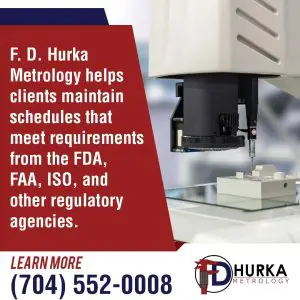
Many industries are governed by strict regulations that require regular calibration of equipment. Noncompliance can result in hefty fines and damage to a company’s reputation. For example, the FDA mandates that various manufacturing processes, especially in pharmaceuticals and healthcare, meet specific calibration standards to maintain product efficacy and safety.
The Federal Aviation Administration (FAA) enforces strict compliance with safety and operational standards. For instance, violations of hazardous materials transportation laws that result in death, serious illness, severe injury, or substantial property destruction can lead to fines of up to $232,762.
By keeping your calibration schedules up to date, you help maintain compliance with these standards, protecting both your business and your customers.
Cost of Inaccuracy in Manufacturing
How Small Measurement Errors Lead to Big Financial and Reputational Losses
Even small measurement errors can lead to scrap, rework, or warranty claims—costs that add up quickly. Calibration guarantees parts meet spec from the start. For example, incorrect readings in machining can lead to scrap parts, rework, or warranty claims. In sectors where components must fit within tight tolerances, inaccuracies can ripple through supply chains, increasing lead times and lowering customer satisfaction. Calibration minimizes these risks by maintaining consistent, accurate outputs.
Industries That Depend on Calibration
F. D. Hurka Metrology supports a wide range of industries where precision is critical:
- Aerospace and Defense – Accurate calibration ascertains mission-critical components like avionics and flight control systems meet strict FAA and DoD specifications.
- Medical Device Manufacturing – Precision in measurements supports the production of life-saving devices, such as infusion pumps and surgical instruments, that must comply with FDA and ISO 13485 standards.
- Pharmaceutical Production – Calibration of environmental chambers, balances, and pipettes helps make sure that drug purity and consistency are in accordance with cGMP regulations.
- Food and Beverage Processing – Properly calibrated temperature and pressure instruments maintain product safety and quality, meeting FDA and HACCP requirements.
- Automotive and Heavy Equipment – Torque wrenches, pressure gauges, and CMMs must be calibrated to maintain safety and performance in engines, braking systems, and assemblies.
- Plastics and Injection Molding – Precise control of temperature, pressure, and timing systems guarantees part consistency and reduces costly rework.
- Electronics and Semiconductors – Measurement tools with nanometer-level accuracy support high-speed circuit production and meet ESD standards.
Each of these industries relies on accurate measurements to protect public safety, maintain compliance, and preserve product performance. Our calibration services are tailored to the unique demands of each sector.
Support Systems That Strengthen Calibration Programs
Traceability and Measurement Standards
Linking Every Measurement to Recognized Standards for Reliable Results
Our calibration services are traceable to national and international standards, including NIST. This traceability means that every measurement we perform can be linked to a recognized reference standard, which is critical for audits and compliance. With our ISO 17025:2017 accreditation, we help manufacturers maintain audit readiness and meet quality management system requirements.
Digital Documentation and Tracking
Streamlining Records and Audits with Accurate, Accessible Calibration Data
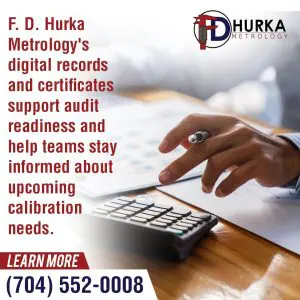
F. D. Hurka Metrology offers digital calibration certificates and record-keeping systems that simplify audit preparation and internal reviews. Our digital tools help clients track upcoming calibration dates, view historical data, and receive automated reminders, eliminating guesswork and promoting consistency. These records are audit-ready and support ISO and FDA compliance efforts.
The Role of F. D. Hurka Metrology
F. D. Hurka Metrology provides calibration services to help businesses like yours operate with confidence. Our ISO 17025:2017 accredited calibration confirms that all equipment conforms to national and international standards.
Our Calibration Services
Trusted Solutions to Keep Your Equipment Accurate and Operations Running
- In-House Calibration: We offer in-house calibration for various precision measurement equipment. Our team of trained professionals meticulously carries out calibration tasks, identifying any issues and correcting them promptly to avoid interruptions in your workflow.
- On-Site Calibration: If your equipment is too large or sensitive to transport, we provide on-site calibration. Our technicians come to your facility to keep your measurement systems accurate without disrupting your operations.
- Regular Calibration Schedules: We help businesses establish regular calibration schedules tailored to their needs. By proactively implementing these schedules, you can prevent issues before they arise and maintain a high standard of quality within your manufacturing processes.
- Contract Inspection Services: Apart from calibration, we offer inspection services that include the First Article, Production Part Approval Process (PPAP), and Prototype Inspections. This flexibility guarantees businesses can meet various project-specific inspection needs efficiently.
- Training on Equipment: We also provide training for your team to make certain that they are knowledgeable about calibration procedures and the importance of maintaining equipment accuracy.
Frequently Asked Questions
1. How often should I calibrate my equipment?
Calibration frequency depends on the type of equipment, how frequently it’s used, and industry regulations. We help develop schedules that suit your operational needs and compliance obligations.
2. What if my equipment is new—does it still need calibration?
Yes. Even new equipment should be calibrated before its initial use to verify accuracy and document baseline performance.
3. What is the benefit of ISO 17025 accreditation?
This accreditation demonstrates technical competence and assures that our calibration methods meet rigorous international standards.
Our Commitment to Quality
F. D. Hurka Metrology in Charlotte, NC, is committed to helping manufacturing businesses operate successfully. By investing in regular calibration services, you are not only improving your operational efficiency but also enhancing the reliability of your products and maintaining a safe working environment.
Contact Us
If you are interested in learning more about how our calibration services can benefit your operations, contact us today!
Building a culture of quality and precision in your manufacturing process starts with regular calibration. Let’s work together to prevent costly disruptions and cultivate a safer, more productive environment in your business.
About the Company
F. D. Hurka Metrology has a rich history rooted in precision measurement and calibration services that date back to its founding in 1970. Established with a commitment to accuracy and quality, the company quickly gained recognition in the industry for its dedication to providing reliable calibration solutions.
Over the decades, F. D. Hurka Metrology has adapted to the evolving needs of its clients, embracing advancements in technology and expanding its service offerings. As an ISO 17025:2017 accredited calibration laboratory, the company has maintained high standards in Metrology, positioning itself as a trusted partner for businesses across various sectors, including aerospace, automotive, healthcare, and manufacturing.
With a focus on delivering exceptional service and fostering long-term relationships, F. D. Hurka Company has built an impressive legacy in the field, continuously aiming to meet the demands of an ever-changing marketplace.

Chuck Meredith is a military veteran with over two decades of experience at FD Hurka Metrology. Since joining the company in 1999, Chuck dedicated 20 years to sales before stepping into the role of President in January 2020. Passionate about people and service, Chuck takes pride in ensuring FD Hurka provides exceptional gaging and calibration solutions to its customers.
GET IN TOUCH
Shipping Address
Mailing Address
Phone Number
Fax Number
CONTACT
To request specific information or to have someone from the F. D. Hurka Metrology contact you, please fill out the contact form or click the button below to request a quote:
