

Modern manufacturing demands higher production speeds without compromising measurement precision. Automated gaging systems deliver both increased throughput and maintained accuracy standards. Traditional manual inspection methods create bottlenecks that limit production capacity and introduce human error variables.
We at F. D. Hurka Metrology have witnessed the transformation automated measurement brings to manufacturing operations. Our experience in Charlotte shows that properly implemented gaging automation reduces inspection time while improving measurement consistency. Automated measurement systems handle repetitive tasks more reliably than manual processes.
Understanding Automated Gaging Technology
Core Components of Gaging Automation
Automated gaging integrates sensors, actuators, and control systems to perform measurements without human intervention. These systems use programmable logic controllers to execute measurement sequences consistently. Automated measurement systems eliminate operator-dependent variables that affect measurement reliability.
We work with manufacturers to implement gaging automation solutions tailored to their specific requirements. Each automated gaging system includes measurement probes, positioning mechanisms, and data collection interfaces. Software controls coordinate all system components to perform precise measurements repeatedly.
Modern automated measurement technology incorporates advanced sensor designs and real-time feedback systems. These components work together to maintain measurement accuracy across varying production conditions. F. D. Hurka Metrology helps clients select appropriate automated gaging components for their applications.
Software Integration Capabilities
Automated gaging systems rely on sophisticated software to control measurement processes and analyze data. Programming interfaces allow operators to create custom measurement routines for different part geometries. Gaging automation software provides statistical analysis tools for process control applications.
We recommend software solutions that integrate seamlessly with existing manufacturing execution systems. Automated measurement data flows directly into quality management databases without manual data entry. This integration reduces errors and provides real-time quality feedback to production teams.
F. D. Hurka Metrology supports the implementation of automated gaging software that meets industry-specific requirements. Our team helps configure measurement programs and train operators on system capabilities. Proper software setup maximizes the benefits of automated measurement systems.
Production Speed Advantages
Cycle Time Reduction
Automated gaging dramatically reduces measurement cycle times compared to manual inspection methods. Traditional manual gaging requires operators to position parts, take measurements, and record data manually. Automated measurement systems complete these tasks in seconds rather than minutes.
We have observed cycle time reductions of 60-80% when manufacturers implement automated gaging solutions. These improvements directly translate to increased production capacity without additional labor costs. Automated measurement systems operate continuously during production shifts.
Production lines benefit from automated gaging through reduced inspection bottlenecks. Parts move through measurement stations automatically without operator intervention. F. D. Hurka Metrology designs gaging automation workflows that maintain production flow while capturing measurement data.
Continuous Operation Benefits
Automated measurement systems operate consistently throughout production shifts without fatigue or attention lapses. Manual inspection performance varies based on operator experience, concentration, and physical condition. Gaging automation maintains constant measurement speed regardless of shift changes or production demands.
We implement automated gaging solutions that run 24/7 with minimal supervision requirements. These systems perform thousands of measurements daily while maintaining accuracy standards. Automated measurement data provides complete inspection records for every produced part.
Charlotte-based manufacturers using our automated gaging systems report significant productivity improvements. Production managers appreciate the predictable inspection times that automated measurement systems provide. F. D. Hurka Metrology helps optimize automated gaging workflows for maximum throughput.
Throughput Scalability
Automated gaging systems scale easily to accommodate increased production volumes. Additional measurement stations can be added without proportional increases in labor costs. Automated measurement systems handle volume fluctuations more efficiently than manual inspection methods.
We design gaging automation solutions that grow with manufacturing requirements. Modular automated gaging systems allow capacity expansion through additional sensors or measurement points. Software controls accommodate new measurement requirements without a complete system redesign.
F. D. Hurka Metrology helps manufacturers plan automated measurement system expansion strategies. Our experience guides capacity planning decisions for long-term production growth. Automated gaging investments provide returns through increased production capability.
Accuracy Maintenance Strategies
Calibration Protocols
Automated gaging systems require regular calibration to maintain measurement accuracy over time. We establish calibration schedules based on system usage patterns and accuracy requirements. Automated measurement systems provide calibration reminders and historical performance tracking.
Our ISO 17025:2017 accredited laboratory provides calibration services for automated gaging systems. We calibrate individual sensors, measurement probes, and complete automated measurement systems. Proper calibration maintains accuracy standards while maximizing system uptime.
Gaging automation systems include built-in calibration verification routines that monitor performance continuously. These features alert operators when calibration intervals approach or accuracy drifts beyond acceptable limits. F. D. Hurka Metrology helps implement calibration protocols that maintain automated gaging accuracy.
Environmental Controls
Temperature variations affect automated gaging accuracy through thermal expansion of parts and measurement systems. We recommend environmental controls that maintain stable conditions around automated measurement systems. Gaging automation performs best in temperature-controlled environments with minimal air circulation.
Vibration isolation protects automated gaging systems from external disturbances that affect measurement precision. Production machinery and facility operations can introduce vibrations that impact automated measurement accuracy. Proper foundation design isolates gaging automation from these influences.
F. D. Hurka Metrology evaluates environmental conditions before implementing automated gaging solutions. Our assessments identify potential accuracy threats and recommend protective measures. Environmental stability directly affects automated measurement system performance.
Quality Assurance Procedures
Automated gaging systems require quality assurance procedures to verify measurement accuracy and system performance. We establish check standards and verification routines that operators perform regularly. Automated measurement systems provide statistical data that identifies accuracy trends and system drift.
Reference standards verify automated gaging accuracy using known measurement values. These standards undergo regular calibration to maintain traceability to national measurement standards. We help clients select appropriate reference standards for their automated measurement applications.
Gaging automation software includes statistical process control tools that monitor measurement consistency. These tools identify when automated measurement systems require attention or calibration. F. D. Hurka Metrology trains operators to interpret statistical data and respond appropriately to system alerts.
Industry Applications
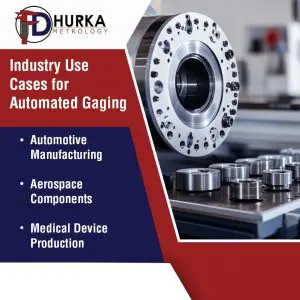
Automotive Manufacturing
- Automated measurement systems handle automotive production speeds while maintaining quality standards. We work with automotive suppliers in Charlotte to implement gaging automation for engine blocks, transmission housings, and brake components.
- Production lines use automated gaging for 100% inspection of safety-critical components. F. D. Hurka Metrology helps automotive manufacturers implement automated measurement solutions that meet industry standards.
Aerospace Component Verification
- Automated measurement systems generate detailed inspection reports for regulatory compliance. We support aerospace manufacturers with gaging automation solutions for airfoil profiles, bolt hole patterns, and surface characteristics.
- Gaging automation handles repetitive measurements required for aerospace statistical sampling plans. F. D. Hurka Metrology provides automated gaging expertise for complex component geometries and certification requirements.
Medical Device Production
- Automated measurement systems support FDA validation requirements through complete data collection. We help medical device manufacturers implement gaging automation for implant devices and surgical instruments.
- Clean room environments benefit from automated gaging systems that minimize human interaction with sterile components. F. D. Hurka Metrology provides automated measurement solutions compatible with medical device production requirements.
Implementation Considerations
System Integration Planning
Successful automated gaging implementation requires careful planning and system integration. We evaluate existing production workflows to identify optimal automated measurement integration points. Gaging automation works best when integrated seamlessly into production processes.
Production line layouts affect automated gaging system design and performance. We analyze material flow patterns and cycle time requirements to position automated measurement systems appropriately. Proper integration maintains production efficiency while adding inspection capability.
F. D. Hurka Metrology helps manufacturers develop implementation timelines that minimize production disruptions. Our experience guides decision-making about automated gaging system sizing, positioning, and integration requirements. Proper planning ensures successful automated measurement system deployment.
Operator Training Requirements
Automated gaging systems require operator training for setup, operation, and troubleshooting procedures. We provide training programs that cover system operation, measurement programming, and basic maintenance tasks. Gaging automation training includes statistical analysis and quality control procedures.
Operators learn to program automated measurement routines for different part geometries and inspection requirements. Training covers software interfaces, measurement setup procedures, and data interpretation techniques. We customize training programs for specific automated gaging applications.
Maintenance training helps operators perform routine system care and identify when professional service is needed. Automated measurement systems require regular cleaning, calibration verification, and component inspection. F. D. Hurka Metrology provides ongoing training support for automated gaging operations.
Cost-Benefit Analysis
Automated gaging investments require a thorough cost-benefit analysis to justify capital expenditures. We help manufacturers calculate return on investment based on labor savings, increased throughput, and quality improvements. Automated measurement systems typically pay for themselves through reduced inspection costs and improved productivity.
Labor cost reductions represent the primary benefit of gaging automation implementation. Automated measurement systems eliminate manual inspection labor while increasing inspection capacity. Quality improvements reduce scrap costs and customer complaints.
Productivity gains from automated gaging include faster cycle times and increased production capacity. These benefits translate directly to revenue increases and improved competitiveness. F. D. Hurka Metrology helps quantify automated measurement system benefits for financial justification.
Technology Advancement Trends
Sensor Technology Improvements
Modern automated gaging systems benefit from advanced sensor technologies that improve accuracy and reliability. Laser sensors, vision systems, and contact probes offer different advantages for automated measurement applications. Gaging automation continues advancing through improved sensor designs and measurement capabilities.
We stay current with sensor technology developments to recommend optimal solutions for client applications. New sensor designs offer higher resolution, faster response times, and improved environmental resistance. Automated measurement systems incorporate these advances for better performance.
Sensor integration capabilities continue to improve through standardized interfaces and communication protocols. These improvements simplify automated gaging system design and reduce implementation costs. F. D. Hurka Metrology evaluates new sensor technologies for client benefit.
Data Analytics Integration
Automated gaging systems generate large amounts of measurement data that support advanced analytics applications. Machine learning algorithms identify patterns in automated measurement data that predict quality issues. Gaging automation data enables predictive quality management and process optimization.
We help manufacturers implement data analytics tools that maximize automated measurement system value. These tools identify process trends, predict maintenance needs, and optimize production parameters. Automated gaging data supports continuous improvement initiatives.
Cloud-based analytics platforms process automated measurement data from multiple production locations. These systems provide real-time quality dashboards and automated reporting capabilities. F. D. Hurka Metrology supports data analytics implementation for automated gaging systems.
Maximizing Automated Gaging Success
Automated gaging represents a proven approach to increasing production output while maintaining measurement accuracy. Successful implementation requires proper planning, appropriate technology selection, and ongoing support. We at F. D. Hurka Metrology brings decades of experience to automated measurement system projects.
Our ISO 17025:2017 accredited laboratory supports automated gaging systems through calibration services and technical expertise. We understand the unique challenges facing manufacturers implementing gaging automation solutions. Our Charlotte-based team provides local support for automated measurement system success.
Positioning for the Future with Automated Gaging
Automated measurement systems continue evolving through technological advances and improved integration capabilities. Manufacturers investing in gaging automation today position themselves for future growth and competitiveness. Contact F. D. Hurka Metrology to discuss how automated gaging can benefit your production operations.

Chuck Meredith is a military veteran with over two decades of experience at FD Hurka Metrology. Since joining the company in 1999, Chuck dedicated 20 years to sales before stepping into the role of President in January 2020. Passionate about people and service, Chuck takes pride in ensuring FD Hurka provides exceptional gaging and calibration solutions to its customers.
GET IN TOUCH
Shipping Address
Mailing Address
Phone Number
Fax Number
CONTACT
To request specific information or to have someone from the F. D. Hurka Metrology contact you, please fill out the contact form or click the button below to request a quote:
