

Precision measurement is the cornerstone of quality in manufacturing. Whether producing aerospace turbine blades, automotive engine components, or medical implants, measurements like flatness, parallelism, and perpendicularity ensure parts meet exacting specifications. These measurements rely on tools like Coordinate Measuring Machines (CMMs), vision systems, and hard gages, which must be calibrated to maintain accuracy. While on-site calibration offers convenience, in-house calibration provides unmatched control, precision, and efficiency in a dedicated laboratory environment, ensuring compliance with standards like ISO 17025 and minimizing production disruptions.
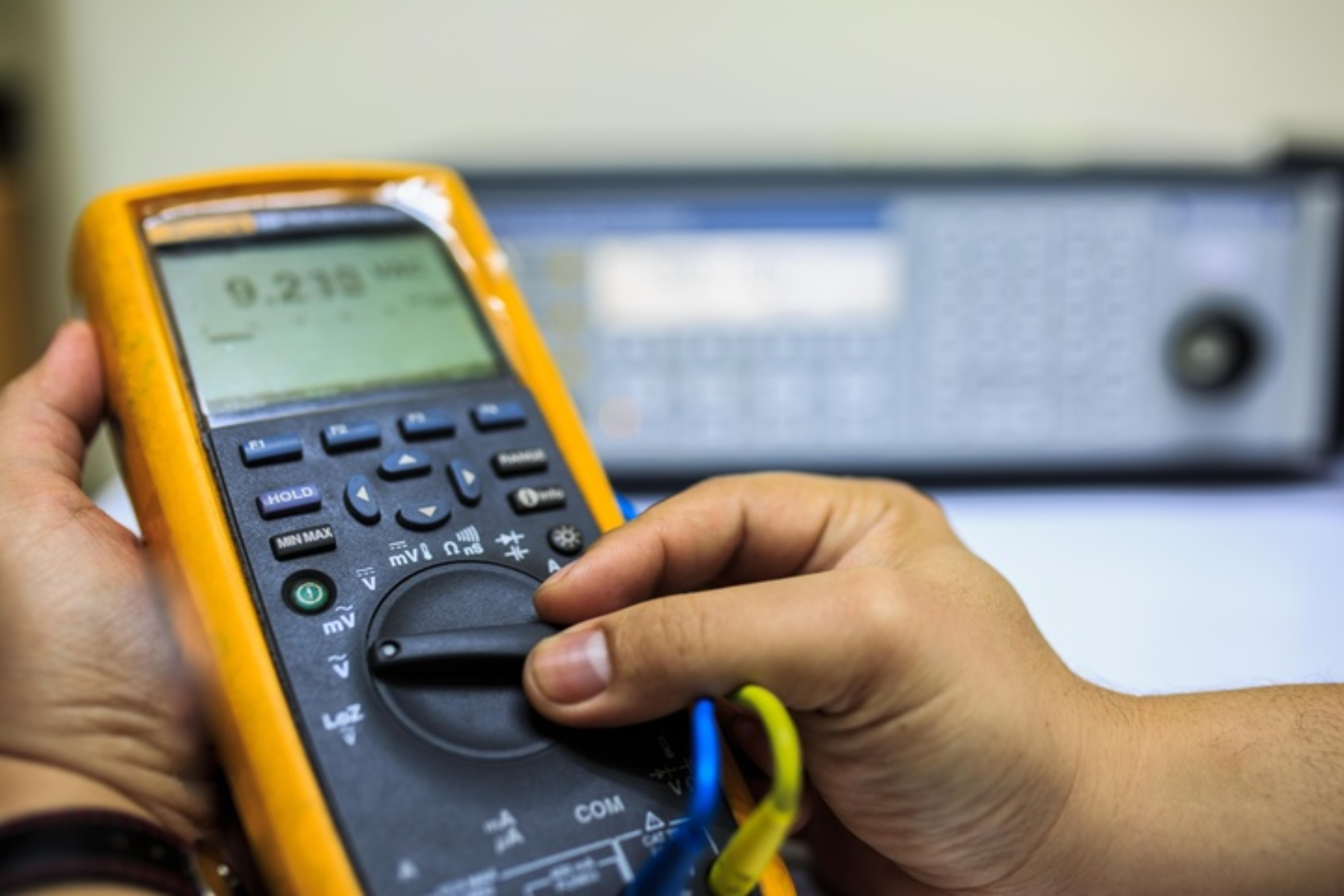 Understanding In-House Calibration
In-house calibration involves calibrating measurement tools in a controlled laboratory environment at a provider’s facility, such as F. D. Hurka’s Charlotte lab, rather than on-site at a manufacturing plant. This approach eliminates shop floor variables like dust, oil, temperature fluctuations, or vibrations, which can affect measurement accuracy. By using high-precision standards traceable to NIST and advanced equipment like laser interferometers, in-house calibration ensures tools deliver reliable results for critical measurements.
Key Measurements Covered by In-House Calibration
In-house calibration verifies a range of geometric dimensioning and tolerancing (GD&T) features, essential for ensuring part quality:
- Flatness: Ensures a surface is uniformly level, critical for mating parts like aerospace turbine blades or semiconductor wafers. Measured using CMMs or precision surface plates with accuracies as tight as ±0.0001 inches.
- Parallelism: Confirms two surfaces remain equidistant across their length, vital for automotive components like engine blocks or transmission housings. Requires precise CMM or vision system calibration.
- Perpendicularity: Verifies surfaces are at exact 90-degree angles, crucial for medical devices like orthopedic implants to ensure proper fit.
- Straightness: Ensures a line element is free of bends, important for shafts or rails in machinery.
- Roundness: Measures how closely a cylindrical feature approximates a perfect circle, used in bearings or rotating components.
- Profile Tolerance: Controls the shape of complex surfaces, often checked with advanced vision systems like Micro-Vu Excel.
- Other GD&T Features: Includes cylindricity, concentricity, and angularity, ensuring comprehensive part verification.
These measurements require ISO 17025-accredited processes to guarantee traceability and compliance with industry standards like AS9100 (aerospace) or FDA regulations (medical).
Why In-House Calibration Excels
In-house calibration offers distinct advantages over on-site or external options, based on industry best practices and F. D. Hurka’s expertise:
- Controlled Environment: Labs maintain stable conditions (e.g., 68°F, 50% humidity, vibration-free), ensuring measurements like flatness are unaffected by external factors.
- High-Precision Equipment: In-house facilities use tools like laser interferometers, surface plates, and optical comparators, ideal for complex GD&T checks requiring sub-micron accuracy.
- Speed and Efficiency: Dedicated labs enable rapid calibration, typically 3–5 days, reducing downtime compared to weeks-long external processes.
- Expert Technicians: Factory-trained staff with decades of experience ensure consistent, reliable results, critical for industries with tight tolerances.
- Traceability and Compliance: ISO 17025 accreditation provides calibration certificates traceable to NIST, essential for audits in regulated industries.
- Customized Solutions: Labs can handle specialized calibrations, such as custom gages or high-precision CMMs, tailored to unique manufacturing needs.
F. D. Hurka Metrology’s In-House Calibration Solutions
F. D. Hurka Metrology’s ISO 17025:2017-accredited lab (A2LA cert. #1527.01) in Charlotte, NC, is equipped to calibrate a wide range of measurement tools, ensuring precision for diverse industries. Here’s how we support manufacturers:
- Comprehensive Equipment CalibrationOur lab calibrates an extensive array of tools:
- CMMs: Mitutoyo models like the MiSTAR 555, ideal for flatness and parallelism measurements with accuracies up to ±0.0002 inches.
- Vision Systems: Micro-Vu Excel systems for automated inspection of complex geometries, ensuring profile and perpendicularity accuracy.
- Hard Gages: Edmunds pin, thread, and ring gages for attribute measurements in high-volume production.
- Other Tools: Calipers, micrometers, height gages, and optical comparators, covering all measurement needs. We use NIST-traceable standards to verify accuracy, ensuring compliance with industry regulations.
- Rapid TurnaroundsOur in-house calibration delivers 3–5 day turnarounds, compared to competitors’ 3–5 weeks, minimizing production disruptions. Equipment is processed in a controlled lab, tested thoroughly, and returned with detailed calibration reports, enabling quick reintegration into your workflow.
- Training to Support CalibrationTo maximize in-house calibration benefits, we offer training programs:
- Daily Checks: Teach operators to verify gage accuracy using standards, catching drift early.
- Software Proficiency: Train on InSpec (Micro-Vu) or MCOSMOS (Mitutoyo) for GD&T analysis, enhancing measurement efficiency.
- Calibration Awareness: Educate teams on when to send tools for professional calibration, such as after detecting inconsistencies or damage. Training is available in-house at our Charlotte facility, on-site, or virtually, customized for your equipment and industry.
- Contract Dimensional MeasurementFor manufacturers without advanced gaging equipment, our lab offers contract measurement services. We use CMMs and vision systems to measure flatness, parallelism, and other GD&T features, delivering precise results without requiring you to invest in costly tools.
- Equipment Sales and SupportAs the exclusive Micro-Vu distributor in nine states and a Mitutoyo partner, we provide cutting-edge gages like the MiSTAR 555 CMM (with promotions like 30% off including SP25 scanning probe and MCOSMOS V5.2 software). Our calibration and training ensure you maximize these tools’ performance.
Real-World Impact: In-House Calibration Success
In-house calibration drives measurable outcomes. A medical device manufacturer sent their Micro-Vu vision system to F. D. Hurka’s lab for flatness and perpendicularity calibration. Our 4-day turnaround ensured FDA compliance, preventing a production halt and saving $15,000 in potential downtime costs. Similarly, an aerospace firm calibrated their Mitutoyo CMM in-house for parallelism, achieving ±0.00015-inch accuracy, which led to passing an AS9100 audit with no non-conformances. These examples demonstrate how in-house calibration supports precision, compliance, and efficiency.
Challenges of In-House Calibration and How to Overcome Them
While in-house calibration offers significant benefits, it presents challenges:
- Logistics: Shipping equipment to a lab requires planning. Solution: Schedule during low-production periods and use reliable shipping to minimize delays.
- Equipment Downtime: Temporary loss of tools can affect production. Solution: Maintain backup gages or use F. D. Hurka’s contract measurement services during calibration.
- Cost Considerations: In-house calibration may seem expensive upfront. Solution: The long-term savings from reduced errors and faster turnarounds outweigh initial costs. F. D. Hurka’s rapid service and training help mitigate these challenges, ensuring seamless calibration.
 Tips to Optimize Your In-House Calibration Process
 Tips to Optimize Your In-House Calibration Process
To maximize the benefits of in-house calibration, follow these practical tips:
- Plan Calibration Schedules: Align calibration with maintenance windows or low-production periods to minimize workflow disruptions. Follow manufacturer guidelines (e.g., annual for CMMs, more frequent for heavily used gages).
- Prepare Equipment Properly: Clean and inspect tools before shipping to the lab to avoid delays or additional cleaning fees. Ensure protective packaging to prevent damage.
- Train Operators for Daily Checks: Equip your team to verify gage accuracy daily using standards, reducing the need for frequent professional calibration. F. D. Hurka’s training programs can support this.
- Choose an Accredited Lab: Select an ISO 17025-accredited provider like F. D. Hurka for traceable, audit-ready results, critical for aerospace and medical industries.
- Maintain Detailed Records: Document calibration results and schedules to ensure compliance and easy auditing.
- Leverage Contract Measurement: Use contract measurement services for complex measurements or limited in-house tools to maintain continuous production.
Why In-House Calibration is Worth It
In-house calibration provides a controlled, efficient, and reliable solution for maintaining measurement accuracy. By addressing critical GD&T features like flatness, parallelism, and perpendicularity, it ensures parts meet specifications, reduces defects, and maintains compliance. The controlled lab environment, advanced equipment, and rapid turnarounds make in-house calibration ideal for manufacturers seeking precision without compromise. F. D. Hurka Metrology combines ISO 17025 accreditation, expert staff, and industry-leading tools to deliver measurable benefits, including reduced downtime, improved product quality, and streamlined audit readiness.
Partner with F. D. Hurka for Precision Calibration
Request a quote on our website, email sales@fdhurka.com, or call (216) 354-5354. Keep your measurements precise and your production thriving.

Chuck Meredith is a military veteran with over two decades of experience at FD Hurka Metrology. Since joining the company in 1999, Chuck dedicated 20 years to sales before stepping into the role of President in January 2020. Passionate about people and service, Chuck takes pride in ensuring FD Hurka provides exceptional gaging and calibration solutions to its customers.
GET IN TOUCH
Shipping Address
Mailing Address
Phone Number
Fax Number
CONTACT
To request specific information or to have someone from the F. D. Hurka Metrology contact you, please fill out the contact form or click the button below to request a quote:
