

In today’s quickly changing production environment, Metrology—the science of measurement—is becoming more important than ever. Quality control is being revolutionized by automation as businesses aim for increased precision and faster production. Because they increase accuracy and reduce human error, automated inspection systems are becoming indispensable instruments for upholding superior standards on the manufacturing line.
F. D. Hurka Metrology actively supports the industry’s shift towards automation by providing advanced measurement solutions and expert guidance. By offering advanced measurement solutions and expert guidance, the company supports manufacturers in meeting growing demands without compromising quality. Automation not only boosts consistency but also reduces waste, cuts costs, and optimizes resource use. This evolution is especially visible in manufacturing hubs like Charlotte, North Carolina, where precision measurement is a key factor in staying competitive. For businesses here and beyond, automation is more than an upgrade—it’s a way to future-proof operations.
With deep expertise in Metrology and automated systems, F. D. Hurka Metrology enables companies to confidently face today’s challenges and prepare for what lies ahead.
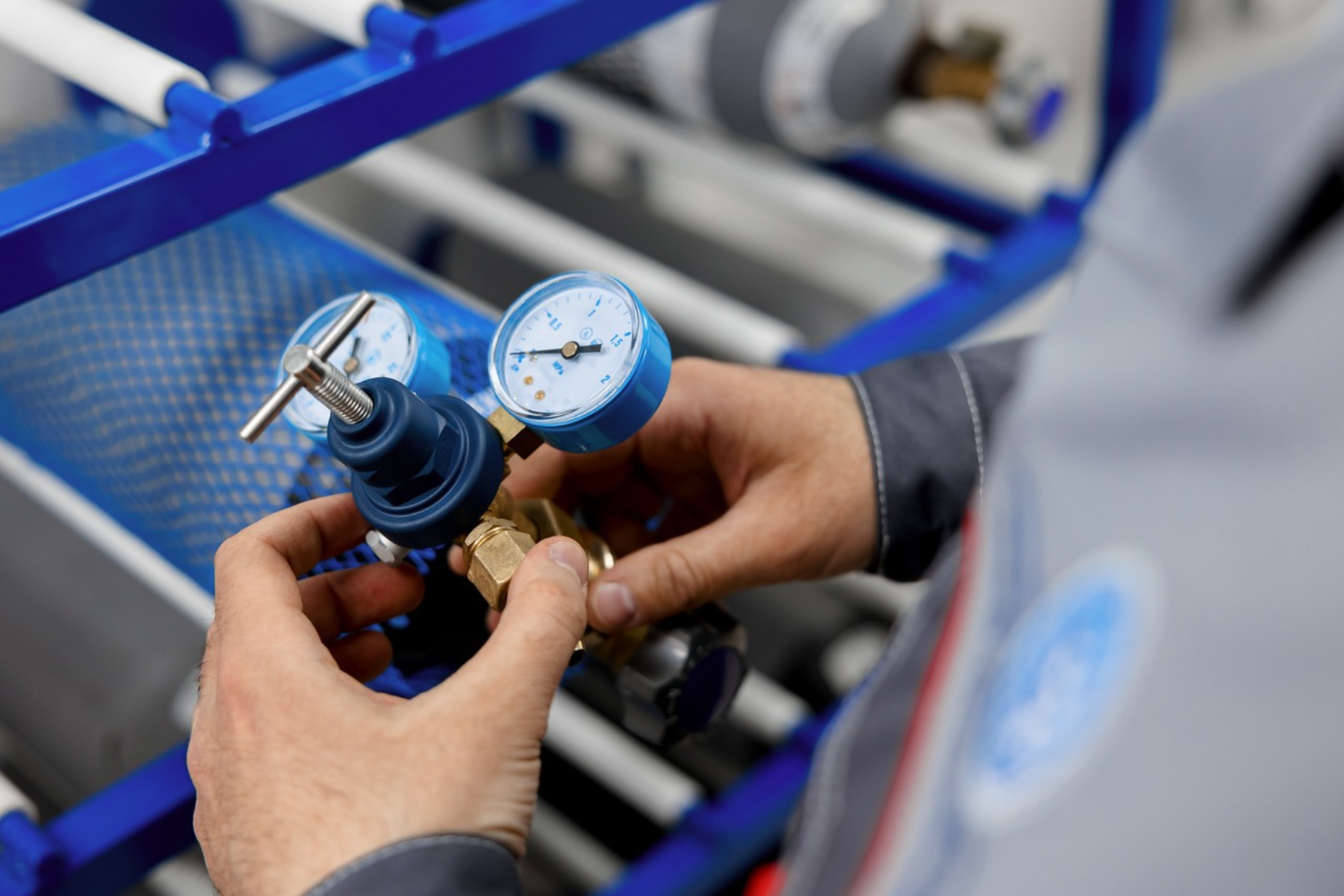 What is Metrology?
The study of measurement, known as Metrology, is the foundation for accuracy, reliability, and quality in a variety of sectors. It includes the creation of measurement standards, instrument calibration, and measurement process validation. Metrology plays a role in maintaining product quality, meeting legal standards, and supporting international compatibility by providing accurate and traceable measurements.
What is Metrology beyond the textbook definition? It serves as the foundation of modern industry by aligning parts accurately, maintaining reliable machine function, and helping final products meet performance and safety requirements. Across sectors such as aerospace, automotive, healthcare, and manufacturing, precise measurement plays a critical role. In operations where even small discrepancies can result in system malfunctions or safety risks, metrology supports more than just measurement—it contributes to the design process, production workflows, and quality control.
As technology evolves, so does Metrology. Increasingly, automation is transforming traditional measurement practices. Automated systems, enhanced by artificial intelligence and machine learning, streamline inspections, minimize human error, and deliver highly repeatable and reliable results. These technologies not only improve efficiency but also meet the growing industrial demand for faster, smarter quality control solutions. The National Institute of Standards and Technology (NIST) has initiated programs exploring how artificial intelligence can enhance monitoring in manufacturing processes, highlighting the increasing role of smart automation in quality control.
The Growing Role of Automation in Metrology
Automation has become a standard part of quality control processes for companies that focus on accuracy and efficiency. Automated inspection systems check product dimensions and other specified characteristics against set tolerances with consistent results and high processing speed. This reduces the frequency of mistakes that can occur during manual inspections.
Benefits of Automated Inspection
- Increased Throughput: Automation considerably enhances inspection cycles, allowing for quicker evaluation of products. This increased speed accelerates the passage of products through the quality control phase, eliminating delays that can hinder overall production efficiency. When inspection is no longer a bottleneck, businesses can meet market demands more effectively.
- Reduced Errors: The potential for human error presents a constant risk in quality control processes. Automated inspection systems dramatically reduce the likelihood of mistakes by using advanced algorithms that rapidly analyze measurements with a level of precision that manual processes struggle to match. This reliability fosters a higher standard of quality across all products.
- Cost Efficiency: Although adopting automated inspection technology requires a substantial upfront investment, the long-term financial benefits can be profound. Businesses can expect significant savings from reduced labor costs and minimized material waste. When products do not have to be reworked or scrapped due to inaccuracies, the overall cost of production decreases.
- Real-time Data Collection: Automated systems can continuously gather data throughout the inspection process, providing a wealth of information that is critical for maintaining operational excellence. This data aids in identifying performance trends, troubleshooting issues as they arise, and making informed predictions about future production runs. Real-time insights lead to more proactive decision-making.
- Integration with Manufacturing Processes: The seamless integration of automated inspection systems with other manufacturing technologies, such as Computer-Aided Design (CAD) and Computer-Aided Manufacturing (CAM) software, creates a streamlined workflow that flows from design to production. This interconnectedness supports communication across various stages of manufacturing, helping each component meet specified requirements from the beginning.
Dimensional Metrology in Automation
Dimensional Metrology focuses on precise measurements of physical objects. It plays a critical role in quality control, measuring length, width, height, and volume to confirm products meet specifications. Automated dimensional Metrology systems utilize high-tech equipment to ascertain efficient compliance.
Technologies Used in Dimensional Metrology:
- Coordinate Measuring Machines (CMMs): These machines measure the physical geometrical characteristics of an object. Automated CMMs allow for extensive scanning of components without manual intervention.
- Optical Inspection Systems: These systems use light to inspect components. They can quickly assess surface conditions and dimensions of parts without physical contact, reducing the risk of damage during measurement.
- Laser Scanning: Laser scanners provide precise dimensional data by capturing a complete three-dimensional view of the part. This data can be used for further analysis and comparison against specifications.
Industrial Metrology and Its Transformation
Industrial Metrology applies measurement techniques in industrial processes. The landscape of industrial Metrology is changing due to the rise of automation.
Key Changes Driven by Automation
- Quality Assurance in Production: Automation makes certain that every piece produced meets the industry’s standards, offering instant feedback loops that keep the production process aligned with quality expectations.
- Predictive Maintenance: Automated systems can constantly monitor equipment state, indicating potential issues before they lead to failures. This proactive approach eliminates downtime and optimizes the supply chain.
- Compliance and Record Keeping: Automated systems can maintain detailed records of all measurements and inspections performed, meeting regulatory requirements and providing documentation for audits.
Automation and Industry 4.0
Metrology automation plays a key role in the broader shift toward connected, data-driven manufacturing. As part of the Industry 4.0 movement, smart inspection systems contribute to real-time quality control, predictive maintenance, and closed-loop manufacturing processes. Automated measurement data can be integrated directly into enterprise systems (like ERP or MES), enabling faster, better-informed decisions that reduce waste and improve overall productivity. This alignment with digital transformation helps manufacturers stay competitive in increasingly data-centric production environments.
Challenges to Consider When Adopting Automation
While automation brings measurable advantages to Metrology, its adoption doesn’t come without obstacles. Implementing automated systems requires a careful balance of technology, training, and workflow adaptation.
Initial investment can be a significant consideration. Automated inspection systems, robotic handlers, and integration with software platforms often require upfront capital. For some facilities, this cost can delay adoption, even if long-term gains are clear.
Integration with existing infrastructure may also present challenges. Legacy equipment, data silos, or inconsistent workflows can make it harder to implement seamless, fully automated processes without adjustments or retrofitting.
Training and support are important. Teams familiar with manual inspection methods may need guidance when shifting to new tools. Successful implementation depends on both having the right technology and providing people with the knowledge to use it effectively.
Lastly, not all parts or processes are suitable for automation. Low-volume, highly custom, or complex geometries may still require manual inspection or hybrid approaches.
Despite these challenges, many organizations find that the long-term improvements in accuracy, repeatability, and throughput justify the effort. Planning and choosing the right Metrology partner can smooth the transition.
The Role of F. D. Hurka Metrology
At F. D. Hurka Metrology, we are at the forefront of integrating automated technologies into our Metrology services. Our commitment to providing quality calibration and inspection services has led to the adoption of advanced automated inspection systems.
Our Services:
- In-House Calibration: Complete in-house calibration services tailored for various precision measurement equipment under ISO 17025:2017 accreditation.
- On-Site Calibration: Experienced technicians provide calibration directly at your facility with minimal disruption.
- Inspection Services: Contract inspection services including First Article, PPAP, Masters, and Prototype Inspections tailored to your project needs.
Benefits to Clients
Partnering with F. D. Hurka Company gives your team access to fast, accurate, and consistent measurement services tailored to the needs of modern manufacturing.
- Precision you can trust: Automated systems help eliminate human error and ascertain every measurement meets standards.
- Faster project timelines: Reduced inspection bottlenecks speed up production.
- Lower overall costs: Less rework, waste, and labor effort mean stronger cost control.
- Reliable documentation: Real-time data capture and traceable records help meet compliance confidently.
Looking Ahead: Embracing the Future of Metrology
Automation is transforming metrology by introducing methods that improve efficiency and measurement consistency. Adapting to these developments is important for manufacturers that depend on precise measurement processes.
At F. D. Hurka Metrology, we are committed to leading this progress by continuously evolving our services, integrating smarter systems, and enhancing traceability to provide even more value.
 F. D. Hurka Metrology: A Partner in Progress
 F. D. Hurka Metrology: A Partner in Progress
At F. D. Hurka Metrology, we don’t just adapt to changes—we help lead them. By staying at the forefront of automated inspection and calibration technologies, we continuously evolve our services to meet the needs of modern manufacturers. Our team is committed to innovation, accuracy, and practical solutions that help our clients succeed in a fast-changing industry. As technology advances, so will our approach—integrating even smarter systems, strengthening traceability, and delivering even more value through precision measurement.
Contact Us
Contact us to learn more about our automated Metrology services or how they can benefit your quality control processes. We are dedicated to helping you succeed with our precision measurement solutions. Let us work together to enhance the quality control processes in your industry.
We offer precision measurement and calibration services throughout the Southeastern United States, including North Carolina, South Carolina, Georgia, Alabama, Mississippi, Tennessee, Virginia, Florida, and Louisiana.
Step Confidently into the Future of Quality Control with F. D. Hurka Metrology
Automation is not just a technological upgrade—it’s a competitive necessity. By working with a trusted Metrology company like F. D. Hurka Metrology, your business gains the tools, support, and precision needed to stay ahead in a demanding manufacturing environment.

Chuck Meredith is a military veteran with over two decades of experience at FD Hurka Metrology. Since joining the company in 1999, Chuck dedicated 20 years to sales before stepping into the role of President in January 2020. Passionate about people and service, Chuck takes pride in ensuring FD Hurka provides exceptional gaging and calibration solutions to its customers.
GET IN TOUCH
Shipping Address
Mailing Address
Phone Number
Fax Number
CONTACT
To request specific information or to have someone from the F. D. Hurka Metrology contact you, please fill out the contact form or click the button below to request a quote:
