

In research and development (R&D), measurement integrity is the difference between breakthrough and breakdown. A single untrustworthy data point can invalidate months of testing, derail regulatory submissions, compromise patent applications, or send an entire project back to square one. From aerospace materials labs to medical device startups and advanced electronics prototyping, R&D teams operate in an environment where accuracy, repeatability, traceability, and defensibility are non-negotiable.
Since 1970, F. D. Hurka Metrology has been the trusted calibration and measurement partner for R&D facilities across North Carolina, South Carolina, Georgia, Alabama, Mississippi, Tennessee, Virginia, Florida, and Louisiana. With ISO 17025:2017 accreditation (A2LA Certificate #1527.01), exclusive Micro-Vu distribution, Mitutoyo partnership, and industry-leading 3–5 day calibration turnarounds, we help R&D teams protect measurement integrity from initial concept through final validation.
We will examin why measurement integrity is uniquely critical in R&D, the specific risks R&D teams face, proven technologies and processes that safeguard data quality, and how F. D. Hurka Metrology delivers the speed, precision, and documentation today’s research environments demand.
Why Measurement Integrity Matters More in R&D Than on the Production Floor
- Parts are often one-of-a-kind or produced in runs of 1–10
- Geometries routinely include free-form surfaces, micro-features, soft or flexible materials, and experimental coatings
- Tolerances can be an order of magnitude tighter than production (±0.00005 in is common)
- Data becomes intellectual property, patent evidence, or part of FDA/510(k), FAA, or NADCAP submissions
- Design iterations happen daily — teams need immediate, bulletproof feedback
- Regulatory bodies and peer-reviewed journals demand unbroken NIST traceability and documented measurement uncertainty
When measurement integrity failure in R&D is exponentially more expensive than in production.
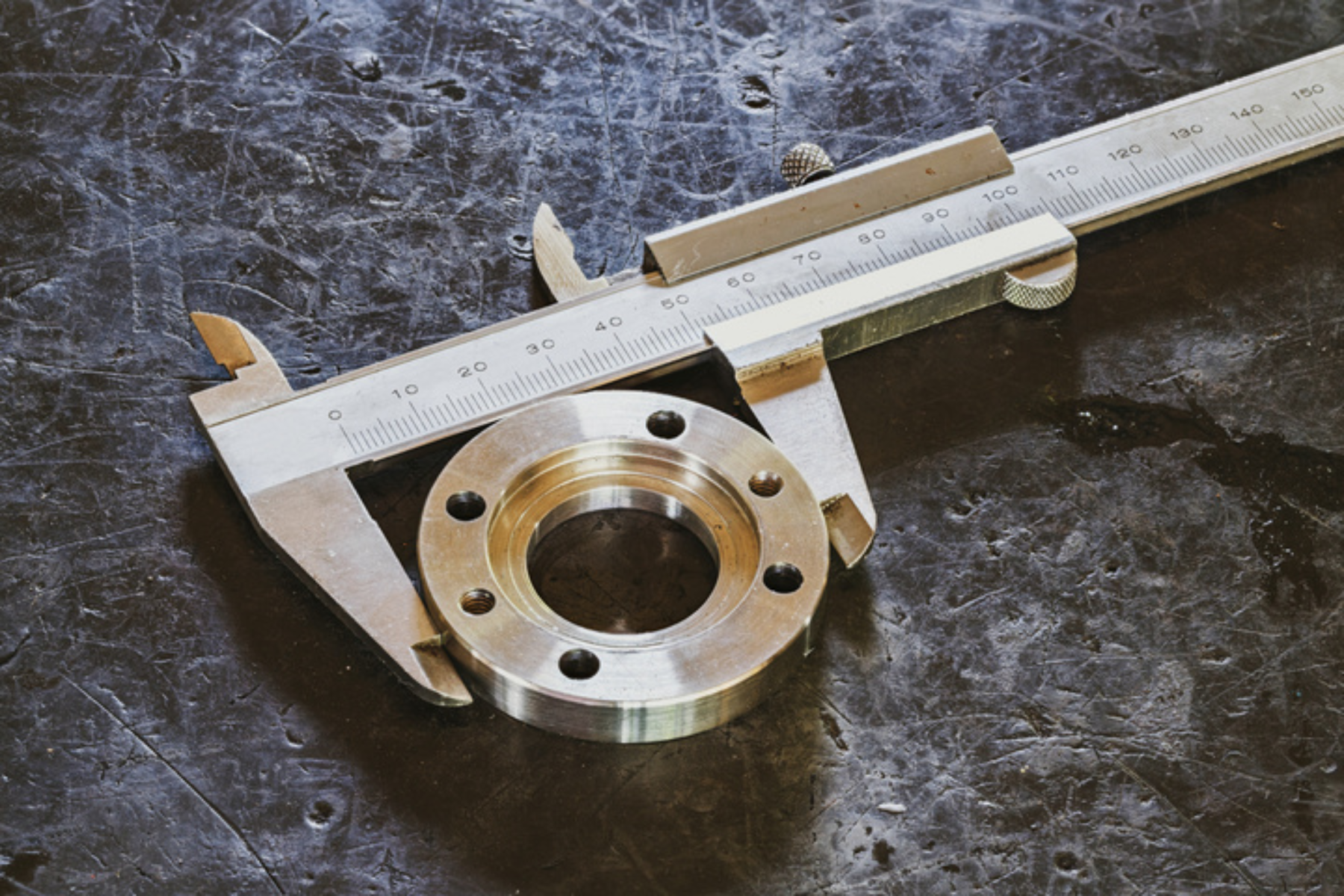 The Hidden Risks to Measurement Integrity in R&D Settings
- Infrequent Use Drift – Tools may sit unused for weeks, masking gradual drift until the critical test.
- Environmental Sensitivity – Lab temperature swings of even 3 °F can shift results outside acceptable uncertainty budgets.
- Prototype Variability – Soft polymers, 3D-printed lattices, and composite layups behave differently under contact probing.
- Operator Skill Paradox – PhD-level engineers are brilliant at design but not always trained in metrology best practices.
- Fixture Repeatability – One-off parts rarely fit standard holding fixtures, introducing positioning error.
- Data Silos – Measurements taken on different instruments without common traceability undermine comparative studies.
Technologies That Preserve Measurement Integrity
Non-Contact Vision Systems (Micro-Vu Excel, Vertex, Sol)
- ±0.0001 in accuracy without part deformation
- Full GD&T capability on complex surfaces
- InSpec software automatically logs temperature, humidity, operator ID, and time stamp with every measurement
- Ideal for polymers, thin films, and micro-features
High-Accuracy CMMs (Mitutoyo CRYSTA-Apex & MiSTAR 555)
- Active temperature compensation from 59–86 °F
- MCOSMOS exports directly into statistical packages (Minitab, JMP, Python)
- Scanning probes capture thousands of points on free-form surfaces
Custom Fixtures and Soft-Touch Holding
Edmunds and in-house engineered fixtures eliminate clamping distortion while maintaining sub-micron repeatability.
Master Artifacts and Check Standards
NIST-traceable gage blocks, ring gages, step gages, and custom golden samples allow daily system verification between calibrations.
How F. D. Hurka Metrology Protects R&D Measurement Integrity
- ISO 17025 Calibration with R&D-Speed Turnaround
3–5 business days (versus competitors’ 3–5 weeks) using uncertainties routinely 4:1 or better than typical R&D tolerances. Digital certificates include measured environmental conditions. - Contract Dimensional Measurement Lab
When internal equipment is unavailable or insufficiently accurate, ship prototypes to our Charlotte lab. We return full inspection reports, point clouds, color maps, and raw data files (CSV, QDAS, DMIS) within days. - On-Site Calibration & IQ/OQ/PQ Support
Technicians travel to your facility for large masters, installed CMMs, or when prototypes cannot be shipped. - Measurement System Analysis (MSA) Services
Full Gage R&R, bias, linearity, and stability studies tailored to prototype measurement systems — essential for Design Verification and Validation (DV&V). - R&D-Specific Training Programs
- Uncertainty budgeting and error propagation
- Proper use of non-contact vs. contact methods
- Daily verification protocols using check standards
- Exporting and documenting data for regulatory packages
Real-World R&D Outcomes
- A cardiovascular device startup used our contract measurement services to generate the dimensional data package for their successful FDA 510(k) clearance — first-pass approval.
- A university aerospace materials lab maintained measurement integrity across a three-year composite development program using our on-site calibration and custom fixture design, resulting in two peer-reviewed papers and a licensed patent.
- An electronics R&D team reduced prototype iteration time by 60 % after implementing Micro-Vu Excel systems with our training and daily verification protocols.
 12 Best Practices for R&D Measurement Integrity
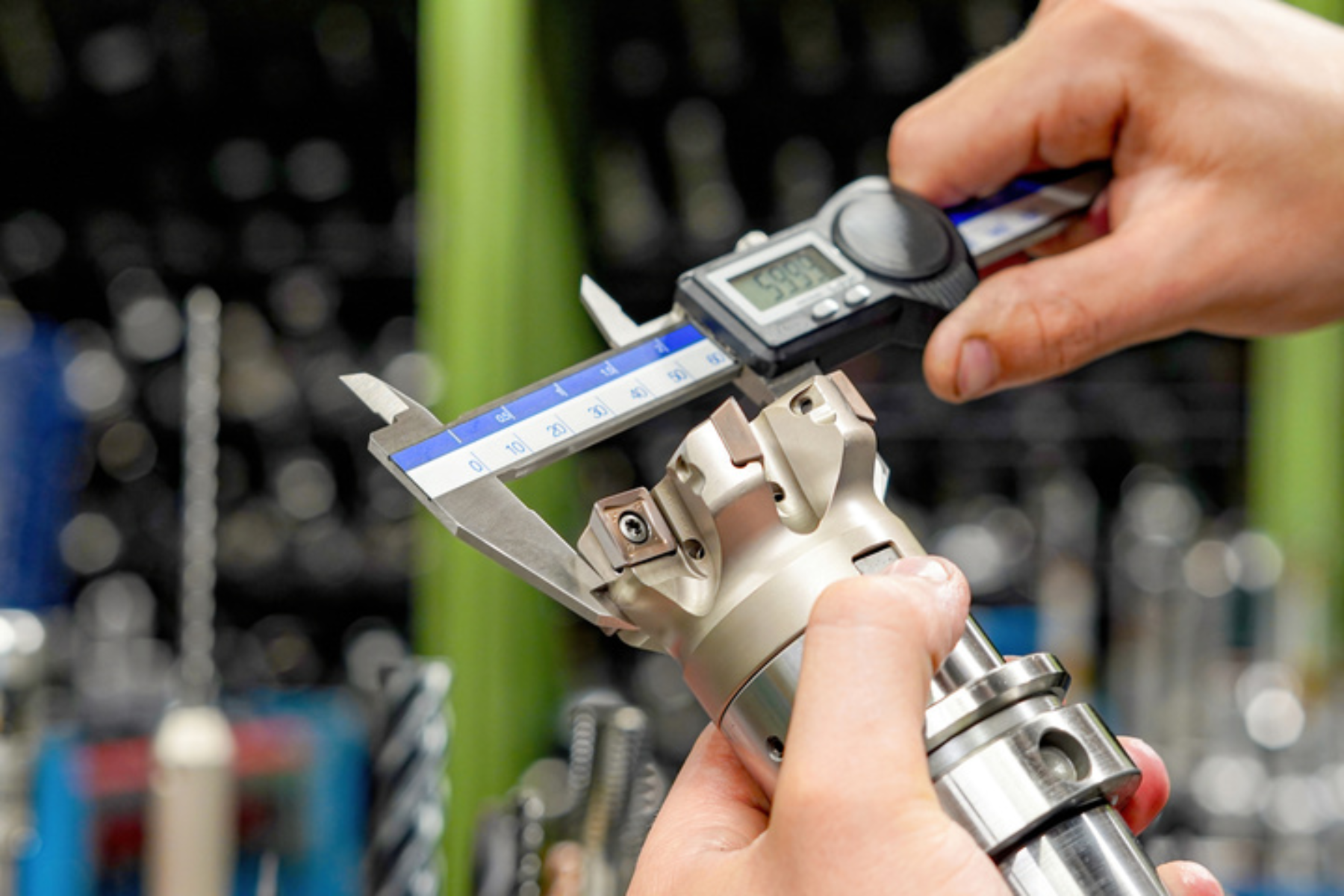 12 Best Practices for R&D Measurement Integrity
- Calibrate R&D tools every 6–12 months (more frequent than production).
- Perform daily performance checks with master artifacts.
- Log temperature and humidity with every critical measurement.
- Use non-contact methods whenever deformation is possible.
- Design and validate custom fixtures before DOE begins.
- Conduct full Gage R&R on prototype measurement systems.
- Store gages in temperature-controlled cabinets between uses.
- Maintain an unbroken chain of NIST traceability documentation.
- Train engineers in metrology principles, not just software buttons.
- Use contract labs for overflow or ultra-high-accuracy needs.
- Include measurement uncertainty in all published results.
- Partner with an accredited lab that understands R&D urgency.
Contact FD Hurka Today!
In R&D, measurement integrity isn’t a nice-to-have; it’s the foundation of credible innovation. One compromised data set can cost millions in delayed market entry or lost funding. F. D. Hurka Metrology combines accredited precision, rapid response, and deep R&D experience to give research teams the confidence to push boundaries without fear of measurement failure. Ready to safeguard your R&D measurement integrity? Request a quote in our website or call (704) 552-0008 today.
Common FAQs About Measurement Integrity
1. What is measurement integrity in R&D?
Measurement integrity means every reading is accurate, repeatable, traceable to NIST, and fully documented—essential for prototype validation, regulatory submissions, and patent data.
2. Why is measurement integrity more critical in R&D than production?
R&D parts are one-off, tolerances are tighter, and data becomes intellectual property or part of FDA/AS9100 submissions where a single bad reading can invalidate months of work.
3. How does temperature affect measurement integrity in labs?
Even a 3 °F swing can push results outside acceptable uncertainty budgets; labs need active compensation or controlled environments to protect integrity.
4. Why do prototypes often need non-contact measurement?
Soft polymers, thin films, and delicate features deform under contact probing—non-contact vision systems preserve measurement integrity on experimental materials.
5. How often should R&D tools be calibrated?
R&D tools should be calibrated every 6–12 months (more frequently than production) and verified daily with check standards to catch drift early.
6. What is contract measurement and when should R&D use it?
Contract measurement sends prototypes to an accredited lab for ultra-accurate inspection when internal tools are insufficient or tied up—ideal for regulatory packages.
7. How do Micro-Vu systems protect measurement integrity?
Micro-Vu Excel, Vertex, and Sol systems log temperature, humidity, and operator ID with every measurement, delivering traceable, non-contact results for prototypes.
8. What role do custom fixtures play in R&D measurement integrity?
Custom fixtures eliminate clamping distortion and ensure sub-micron repeatability on odd-shaped or delicate prototypes that don’t fit standard holders.
9. Why is Gage R&R important before R&D testing begins?
Gage R&R studies prove the measurement system itself is capable and repeatable—required for Design Verification/Validation and regulatory confidence.
10. How does F. D. Hurka Metrology support R&D measurement integrity?
F. D. Hurka offers 3–5 day ISO 17025 calibration, contract measurement, on-site services, custom fixtures, and R&D-specific training across nine states.

Chuck Meredith is a military veteran with over two decades of experience at FD Hurka Metrology. Since joining the company in 1999, Chuck dedicated 20 years to sales before stepping into the role of President in January 2020. Passionate about people and service, Chuck takes pride in ensuring FD Hurka provides exceptional gaging and calibration solutions to its customers.
GET IN TOUCH
Shipping Address
Mailing Address
Phone Number
Fax Number
CONTACT
To request specific information or to have someone from the F. D. Hurka Metrology contact you, please fill out the contact form or click the button below to request a quote:
