

Precision measurement is the foundation of quality in modern manufacturing, ensuring parts meet exacting standards in industries like aerospace, automotive, and medical devices. For decades, manual measurement tools—calipers, micrometers, and hard gages—have been the backbone of quality control, offering affordability and simplicity. However, as production demands grow, manual methods struggle with complex geometries, high-volume inspections, and stringent compliance requirements. Automated measurement, powered by advanced vision systems like those from Micro-Vu, offers a solution, combining the precision of manual tools with the speed and scalability of automation.
Since 1970, F. D. Hurka Metrology, based in Charlotte, North Carolina, has been the exclusive Micro-Vu distributor across nine states: North Carolina, South Carolina, Georgia, Alabama, Mississippi, Tennessee, Virginia, Florida, and Louisiana. With ISO 17025:2017-accredited calibration services (A2LA cert. #1527.01) and tailored training programs, we empower manufacturers to transition seamlessly from manual to automated measurement using Micro-Vu’s Excel, Vertex, and Sol systems. Our 3–5 day calibration turnarounds and expert support ensure accuracy and efficiency.
 The Challenges of Manual Measurement
Manual measurement tools, while reliable for basic tasks, face significant limitations in today’s fast-paced manufacturing environment:
- Time-Consuming Processes: Measuring complex parts, such as aerospace components with intricate profiles, requires multiple manual checks, slowing production. For example, inspecting a turbine blade’s flatness can take hours with calipers.
- Human Error: Operator variability leads to inconsistent results. A 0.001-inch misreading on a medical implant can result in costly defects or regulatory non-compliance.
- Limited Capability for GD&T: Geometric dimensioning and tolerancing (GD&T) features like parallelism, perpendicularity, or roundness are difficult to measure accurately with manual tools, requiring advanced systems.
- Scalability Constraints: High-volume production, such as automotive parts, overwhelms manual methods, creating bottlenecks and increasing labor costs.
- Data Traceability Issues: Manual measurements often rely on handwritten logs, complicating compliance with ISO 17025 or AS9100 audit requirements.
These challenges highlight the need for automated measurement systems that deliver speed, precision, and traceability without sacrificing reliability.
How Micro-Vu Vision Systems Transform Measurement
Micro-Vu, a global leader in non-contact measurement, offers vision systems that bridge the gap between manual and automated methods. Their Excel, Vertex, and Sol systems use high-resolution cameras, laser probes, and InSpec software to deliver fast, accurate, and repeatable measurements. Here’s how Micro-Vu revolutionizes quality control:
- Speed and Repeatability Through AutomationMicro-Vu systems automate inspections, reducing measurement times significantly. For instance, the Excel series can measure hundreds of features—like flatness, parallelism, or profile—in seconds, compared to hours with manual tools. Automated routines ensure consistent results, eliminating human error, making them ideal for high-throughput automotive production.
- Non-Contact Precision for Complex PartsUsing advanced optics and laser probes, Micro-Vu systems measure delicate or intricate parts—such as medical stents or aerospace components—without contact, preventing damage. They achieve accuracies as tight as ±0.0001 inches, surpassing manual tools for GD&T measurements like perpendicularity or surface finish.
- Intuitive InSpec SoftwareMicro-Vu’s InSpec software simplifies programming and analysis. Operators can create measurement routines with minimal training, and the software generates detailed, traceable reports for ISO 17025 compliance. Features like automated edge detection enhance accuracy for complex geometries.
- Versatility Across Industries
- Aerospace: Measures flatness and profile for turbine blades, ensuring AS9100 compliance.
- Automotive: Inspects engine components for parallelism and roundness, supporting high-volume production.
- Medical: Verifies perpendicularity and surface finish for implants, meeting FDA standards.
- Electronics: Measures micro-components with high precision for semiconductor manufacturing.
- Scalability and IntegrationFrom the compact Sol for small shops to the high-capacity Excel for large operations, Micro-Vu systems scale to your needs. Integration with robotic arms or production lines enhances automation, reducing labor costs and improving throughput.
F. D. Hurka Metrology’s Support for Automation
As the exclusive Micro-Vu distributor in nine states, F. D. Hurka Metrology provides comprehensive support to transition from manual to automated measurement:
- Micro-Vu System Sales
- Excel Series: High-capacity systems for complex, high-volume inspections in aerospace and automotive.
- Vertex Series: Versatile, mid-sized systems for diverse manufacturing needs.
- Sol Series: Cost-effective for small shops transitioning from manual tools. Our current promotion offers up to 30% off select Micro-Vu systems with InSpec software, making automation accessible.
- ISO 17025-Accredited CalibrationOur Charlotte lab provides 3–5 day calibration turnarounds for Micro-Vu systems, compared to competitors’ 3–5 weeks. In-house and on-site calibration uses NIST-traceable standards, ensuring accuracy and compliance with detailed certificates for audits.
- Tailored Training Programs
- InSpec Programming: Create automated measurement routines for efficiency.
- Transition Skills: Shift from manual tools (e.g., calipers) to vision systems.
- Compliance Training: Understand ISO 17025 and industry standards.
Factory-trained technicians customize sessions for your industry, equipment, and skill level.
- Contract Measurement ServicesFor manufacturers exploring automation, our lab offers contract measurement using Micro-Vu systems to verify GD&T features, allowing you to test automation without upfront investment.
- Ongoing Technical SupportWe provide maintenance, software upgrades, and troubleshooting to ensure your Micro-Vu systems perform optimally, minimizing downtime and maximizing return on investment.
Real-World Impact: Micro-Vu in Action
Micro-Vu’s automation delivers tangible results. An automotive supplier partnered with F. D. Hurka to implement a Micro-Vu Excel system, replacing manual gaging. After our training, inspection times dropped by 45%, saving $25,000 monthly in labor costs. An aerospace manufacturer used a Vertex system for flatness and profile measurements, achieving ±0.00015-inch accuracy and passing an AS9100 audit flawlessly. These success stories underscore Micro-Vu’s transformative impact.
Overcoming Challenges in Transitioning to Automation
Adopting automated measurement involves challenges, but F. D. Hurka helps you navigate them:
- Learning Curve: Operators unfamiliar with vision systems need training. Solution: Our comprehensive training accelerates proficiency in InSpec and system operation.
- Initial Investment: Automated systems require upfront costs. Solution: Micro-Vu’s Sol series and our promotions (e.g., 30% off) reduce barriers.
- Integration Complexity: Aligning systems with workflows can be challenging. Solution: Our technicians provide integration support for robotic or production line setups.
- Maintenance Needs: Automated systems require regular calibration. Solution: Our 3–5 day calibration ensures minimal downtime.
 Tips to Optimize Your Micro-Vu Implementation
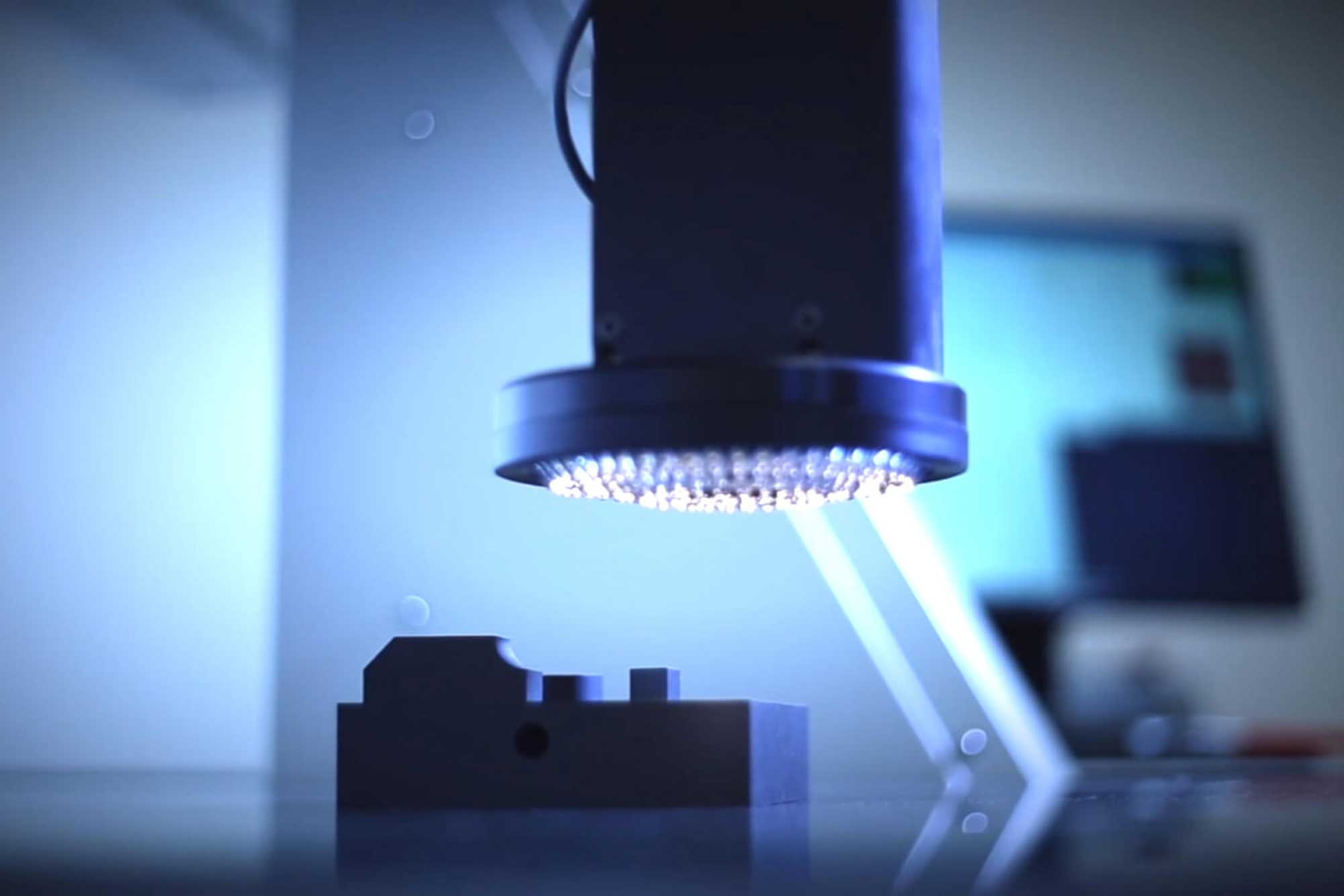 Tips to Optimize Your Micro-Vu Implementation
To maximize Micro-Vu’s benefits, follow these practical tips:
- Evaluate Measurement Needs: Assess part complexity and production volume to select the right system (e.g., Sol for small shops, Excel for high-volume).
- Prioritize Training: Enroll in F. D. Hurka’s training to master InSpec and system operation, reducing errors and boosting efficiency.
- Test with Contract Measurement: Use our lab’s contract services to try Micro-Vu systems before purchasing, ensuring they meet your needs.
- Schedule Regular Calibration: Maintain accuracy with our ISO 17025-accredited calibration, scheduling during low-production periods.
- Integrate Strategically: Work with F. D. Hurka to integrate systems with robotic arms or production lines for seamless automation.
- Monitor Performance: Track inspection times and error rates to measure ROI and identify areas for further training or optimization.
Why Micro-Vu is the Key to Modern Measurement
Micro-Vu vision systems bridge the gap between manual and automated measurement, delivering speed, precision, and scalability. By automating inspections, minimizing errors, and ensuring compliance, they meet the demands of modern manufacturing. F. D. Hurka Metrology’s expertise as the exclusive Micro-Vu distributor, combined with our calibration and training, ensures a smooth transition for aerospace, automotive, medical, and electronics industries.
Ready to embrace automated measurement? Request a quote for Micro-Vu systems, calibration, or training at our website or call (704) 552-0008. Transform your quality control today.

Chuck Meredith is a military veteran with over two decades of experience at FD Hurka Metrology. Since joining the company in 1999, Chuck dedicated 20 years to sales before stepping into the role of President in January 2020. Passionate about people and service, Chuck takes pride in ensuring FD Hurka provides exceptional gaging and calibration solutions to its customers.
GET IN TOUCH
Shipping Address
Mailing Address
Phone Number
Fax Number
CONTACT
To request specific information or to have someone from the F. D. Hurka Metrology contact you, please fill out the contact form or click the button below to request a quote:
